So, we've just analysed 'Love that doth reign and live within my thought' as the poem of the week, and therefore we need to know who Henry Howard, Earl of Surrey was. It is important to know the backgrounds of poets and what happened in their time periods in order to fully understand every part of their poetry. If someone's writing about the plague, and you don't know what the plague is, you're going to be a bit confused there aren't you.
Name- Henry- Howard, Earl of Surrey
Date of Birth- c.1517
Place of Birth- Hunsdon, England
Time Period- Renaissance
Date of Death- 19th January 1547
Occupation- Aristocrat, poet, Earl
Parents- Thomas Howard, 3rd Duke of Norfolk, Elizabeth Howard, Duchess of Norfolk
Siblings- Mary Howard, Duchess of Richmond, Thomas Howard, 1st Viscount Howard of Bindon, Katherine Howard
Children- Thomas Howard, 4th Duke of Norfolk, Henry Howard, 1st Earl of Northampton, Jane Neville
 Henry was descended from King Edward III on his mother's side and Edward I on his mother's side, so he was never going to be anything lower than an aristocrat! He was raised at the wonderful Windsor Castle alongside King Henry VIII's (and his mistress Elizabeth Blount's) illegitimate son Henry FitzRoy, First Duke of Richmond and Somerset. They became best friends and were also brothers-in-law later in life when Henry Howard's sister married Henry FitzRoy.
Howard became a soldier in Henry VIII's French wars as 'Lieutenant General of the King on Sea and Land', although he was in and out of imprisonment in the army for 'rash' behaviour, such as hitting a courtier and also walking through London at night and smashing people's windows.
In 1524, Henry Howard became Henry Howard, Earl of Surrey following the death of his grandfather, and his father becoming Duke of Norfolk. A lot later, in 1532, he, his cousin Anne Boleyn, the King and Henry FitzRoy went to France, where they stayed for over a year, he was a member of the entourage of Francis I of France.
Henry was descended from King Edward III on his mother's side and Edward I on his mother's side, so he was never going to be anything lower than an aristocrat! He was raised at the wonderful Windsor Castle alongside King Henry VIII's (and his mistress Elizabeth Blount's) illegitimate son Henry FitzRoy, First Duke of Richmond and Somerset. They became best friends and were also brothers-in-law later in life when Henry Howard's sister married Henry FitzRoy.
Howard became a soldier in Henry VIII's French wars as 'Lieutenant General of the King on Sea and Land', although he was in and out of imprisonment in the army for 'rash' behaviour, such as hitting a courtier and also walking through London at night and smashing people's windows.
In 1524, Henry Howard became Henry Howard, Earl of Surrey following the death of his grandfather, and his father becoming Duke of Norfolk. A lot later, in 1532, he, his cousin Anne Boleyn, the King and Henry FitzRoy went to France, where they stayed for over a year, he was a member of the entourage of Francis I of France.

 Henry married Frances de Vere and they had two sons and three daughters together, until she left him for Thomas Staynings, with whom she had another child. In 1536, Howard's first son, Thomas (Fourth Duke of Norfolk) was born on the 10th March. Sadly, Anne Boleyn was executed. She had married Henry VIII on the 25th January 1533, and she became Queen of England on the 1st June that year. On the 7th September 1533, Elizabeth (Queen Elizabeth I) was born, and the King was annoyed that it was a girl. After 3 miscarriages, the King began seeing Jane Seymour. The reason for telling you about Anne's life is because she was executed on King Henry VIII's order on the 19th May 1536 for high treason, adultery and witchcraft. Basically, King Henry just needed her out of the way so that he could marry his sixth and final wife, Jane Seymour.
Her execution obviously upset Howard, especially as Henry FitzRoy also died in this year, aged 17 years. He was buried at Thetford Abbey. Adding to Howard's troubles in 1536, the Pilgrimage of Grace rebellion against the Dissolution of the Monasteries began. Howard fought with his father against the rebels, and eventually won.
Howard was also good friends with poet Thomas Wyatt, and together they were the first English writers to write in the sonnet form that was later adopted by Shakespeare. He was also the first English poet to publish blank verse poetry, and he and Wyatt translated Petrarch's poems excellently. They are now known as 'The Fathers of the English Sonnet'.
Henry married Frances de Vere and they had two sons and three daughters together, until she left him for Thomas Staynings, with whom she had another child. In 1536, Howard's first son, Thomas (Fourth Duke of Norfolk) was born on the 10th March. Sadly, Anne Boleyn was executed. She had married Henry VIII on the 25th January 1533, and she became Queen of England on the 1st June that year. On the 7th September 1533, Elizabeth (Queen Elizabeth I) was born, and the King was annoyed that it was a girl. After 3 miscarriages, the King began seeing Jane Seymour. The reason for telling you about Anne's life is because she was executed on King Henry VIII's order on the 19th May 1536 for high treason, adultery and witchcraft. Basically, King Henry just needed her out of the way so that he could marry his sixth and final wife, Jane Seymour.
Her execution obviously upset Howard, especially as Henry FitzRoy also died in this year, aged 17 years. He was buried at Thetford Abbey. Adding to Howard's troubles in 1536, the Pilgrimage of Grace rebellion against the Dissolution of the Monasteries began. Howard fought with his father against the rebels, and eventually won.
Howard was also good friends with poet Thomas Wyatt, and together they were the first English writers to write in the sonnet form that was later adopted by Shakespeare. He was also the first English poet to publish blank verse poetry, and he and Wyatt translated Petrarch's poems excellently. They are now known as 'The Fathers of the English Sonnet'.
 Meanwhile, Henry VIII was growing extremely ill, paranoid and wild. He was convinced that Howard was planning to take the crown from his son, Edward. Henry Howard and his father were both imprisoned on this theory, and sentenced to death by beheading. Henry was beheaded on the 19th of January, 1547. His father narrowly avoided his fate, as he was due to be beheaded ten days later on the 29th of January, but Henry VIII died first on the 28th. Thomas Howard remained imprisoned until 1553, when Queen Mary pardoned him.
Helpful Howard sites:
http://timesoftudors.blogspot.co.uk/2013/02/henry-howard-earl-of-surrey.html
http://en.wikipedia.org/wiki/Henry_Howard,_Earl_of_Surrey
Meanwhile, Henry VIII was growing extremely ill, paranoid and wild. He was convinced that Howard was planning to take the crown from his son, Edward. Henry Howard and his father were both imprisoned on this theory, and sentenced to death by beheading. Henry was beheaded on the 19th of January, 1547. His father narrowly avoided his fate, as he was due to be beheaded ten days later on the 29th of January, but Henry VIII died first on the 28th. Thomas Howard remained imprisoned until 1553, when Queen Mary pardoned him.
Helpful Howard sites:
http://timesoftudors.blogspot.co.uk/2013/02/henry-howard-earl-of-surrey.html
http://en.wikipedia.org/wiki/Henry_Howard,_Earl_of_Surrey
I know this looks complicated but it's not, bear with me!
'Love That Doth Reign And Live Within My Thought' by Henry Howard, Earl of Surrey (1517-1547).
This is an easy one to start with so lets get down to it:
Love that doth reign and live within my thought,
And built his seat within my captive breast,
Clad in the arms wherein with me he fought,
Oft in my face he doth his banner rest.
But she that taught me love and suffer pain,
My doubtful hope and eke my hot desire
With shamefast look to shadow and refrain,
Her smiling grace converteth straight to ire.
And coward love then to the heart apace
Taketh his flight, where he doth lurk and 'plain,
His purpose lost, and dare not show his face.
For my lord's guilt thus faultless bide I pain.
Yet from my lord shall not my foot remove.
Sweet is the death that taketh end by love.
Analysing the poem.
So. It's a Shakespearean sonnet (notice how it isn't divided like a Petrarchan, however it was translated by the author from a Petrarchan) containing both simple and complex declarative sentences, 6 sentences in total. The couplet at the end is epigrammatic, which means that it summarises the sonnet. The words, 'love' and 'remove' don't exactly rhyme, but it's his poetic license to try to make them. It is still a sonnet, and also it is written in the first person.
Archaisms: doth, oft, eke (to diminish or remove), shamefast, converteth, ire (anger), taketh, thus
Punctuation: commas, full stops, apostrophes
Oxymoron: 'doubtful hope'
Pre-modifiers: coward, hot, doubtful, captive, shamefast, smiling, sweet (post-modifier: faultless)
Semantic field: war/love/the body
Abstract noun: love, thought, pain, hope, desire, grace, ire, guilt
Caesuras: commas used
Enjambement: lines 6 and 9
Volta: happens between lines 12 and 13
Concrete nouns: breast, arms, face, banner, heart, my lord, foot, seat (Love becomes concrete on line 9)
Juxtaposition: 'death that taketh end by love'
Verbs: flight, lurk, apace, rest, built (Present continuous verb: smiling)
First Person: I, my, he, she etc.
Connectives: and, but, for
Love that doth reign and live within my thought,
And built his seat within my captive breast,
Clad in the arms wherein with me he fought,
Oft in my face he doth his banner rest.
But she that taught me love and suffer pain,
My doubtful hope and eke my hot desire
With shamefast look to shadow and refrain,
Her smiling grace converteth straight to ire.
And coward Love then to the heart apace
Taketh his flight, where he doth lurk and 'plain,
His purpose lost, and dare not show his face.
For my lord's guilt thus faultless bide I pain.
Yet from my lord shall not my foot remove.
Sweet is the death that taketh end by love.
What does it all mean?
The words, 'pain' and 'love' are repeated, so we know that Howard was showing how this love hurt him, and his entire body. It starts and ends with love, which shows that love is the main theme that follows this man throughout the circle of his life. Howard has personified love and called it a 'coward'. This would lead us to believe that he is angry about being in love.
Why would anyone be angry to be in love? Well. It seems that the 'he' of the poem, perhaps Henry Howard himself, told the 'she' of the poem that he loved her. She did not approve and responded with anger, thus making him ashamed of his 'cowardly' love that hid away again.
I thought it might help if I added a timeline of European history, and showed you what poets were writing when to help get your poor brain in order on Friday the 13th! (This is going to be a long one I think...hang in there!)
So, lets start with the Middle Ages.
 The Middle Ages lasted from the 5th to the 15th Century, and is also known as the Medieval period. This was a time of villages and Crusades, and famously; The Black Death. 'The Black Death' refers to the bubonic plague which tore through England at an alarming rate and killed about a third of all Europeans at this time. The disease caused black, painful buboes on its victims armpits, legs and groins. There was, and still is no cure for this infectious disease, and after discovering the buboes, victims had days to live. Some were even bricked into their own houses to await their death alone in an attempt to prevent the disease spreading. At the time, people believed that the plague was spread by 'bad air', so plague doctors wore clothes that covered them from head-to-toe, and had iconic masks that looked like beaks, which they filled with perfumes to supposedly stop the bad air (they had no way of seeing microscopic particles, so all they knew of air was of smells, both good and bad). The Middle Ages were also times of extremely poor hygiene. There were tales of rats as big as dogs, and this is where the story of the pied piper came from. Troubadours spread poems and stories in the Middle Ages. These were composers and performers who would travel around to teach people.
 Then came Elizabethan England in 1558-1603, when Queen Elizabeth I inherited the throne. She was the last of the Tudors. Her father was King Henry VIII, and her mother was Anne Boleyn, who (as I'm sure you know) was executed on Henry's command when Elizabeth was two-and-a-half years old. This made Elizabeth an illegitimate child, and so the crown was originally given to her half-brother, King Edward VI. Sadly, he died at the age of fifteen, six years after his coronation as King. After his death, Queen Mary I (Bloody Mary) ruled until her death in 1558. Elizabeth established the English Protestant Church, and had her half-sister Mary, Queen of Scotts (a Roman Catholic) imprisoned on suspicion of plotting with Protestant rebels. She had Mary executed in 1587. Elizabeth never married or had children, and is often referred to as 'The Virgin Queen'. Near the end of the Middle Ages came The Renaissance, which began with the Elizabethan Era. In this era, the invention of the printing press really helped to speed up production as it meant that everything didn't have to be hand-written. Famous poets in this era include William Shakespeare, Francis Drake, Christopher Marlowe and Thomas Wyatt.

The Jacobean Era came next from 1603-1625. This era saw James I as King, and gave birth to the unification of England and Scotland under one ruler and also the foundation of the British colonies in America. Shakespeare wrote, 'The Tempest', 'King Lear' and, 'Macbeth' in this era and famous names in literature included John Webster, Thomas Middleton, John Ford and Ben Jonson.
After this was the Age of Enlightenment, a great time of poetry in the 18th Century. This was a cultural movement which emphasised reason and individualism over tradition. This was a welcome breakthrough of science. It was a revolution based on tests and conclusive evidence, and changed the nature of human thought forever.
The Georgian Era lasted from 1714-1830, it included the amazing Romantic Era from 1770-1850. Romanticism was a reaction to the Industrial Revolution (c.1760-1840) and focused heavily on what nature could teach the human race. There were a lot of great literary figures in this era, including William Wordsworth, Samuel Taylor Coleridge, John Keats, Lord Byron, Percy Bysshe Shelley, William Blake, John Clare, Walter Scott, Mary Shelley, William Hazlitt and Charles Lamb. The Georgian Era was particularly long as it included the reigns of George I, George II, George III, George IV and William IV.
 Next was the strict and structured Victorian Era from 1837-1901, which saw the reign of Queen Victoria. It was a time of peace and prosperity in Britain. This was a time of Industrial Revolution, Charles Darwin's book, 'On The Origin Of Species' which introduced the world to the ideas of evolution, work houses, The Crimean War, the emergence of photography and child labour. Queen Victoria married her first-cousin, Prince Albert in 1840, and also became the Empress of India in 1876. They had nine children together until Albert's death in 1861. From this point on, Victoria became deeply depressed and is famed for mourning and wearing black until her own death in 1901. Her son, Edward VII took over the throne after her death.
 After the Victorians came the Edwardians who existed in England from 1901-1910. This short era included the start of World War 1 and saw the Titanic sink. Fictional writers in this era included J. M. Barrie, Arnold Bennett, G.K. Chesterton, Joseph Conrad, E. M. Forster, John Galsworthy, Kenneth Grahame, Rudyard Kipling, Edith Nesbit, Beatrix Potter, Saki, George Bernard Shaw, H. G. Wells, Edith Wharton, and P. G. Wodehouse.
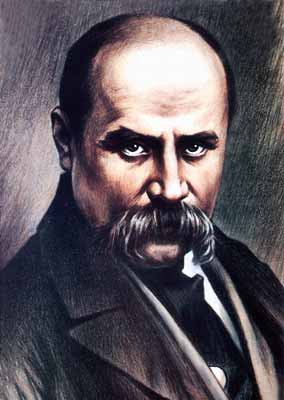
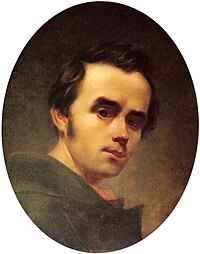
So, my page views are currently: Russia-57, UK-19, US-6, Germany-2 and Ukraine-2. In the spirit of interest, I will be blogging (great word that, 'Blogging') today about a famous Ukrainian poet, because the Ukraine, in my opinion, is often forgotten about and that's not fair! Ukrainians are important too! You may not be aware of any Ukrainian poets, so please allow me to introduce... Mr Taras Shevchenko!
 Name-Taras Hryhorovych Shevchenko
Date of Birth-9th March 1814
Name-Taras Hryhorovych Shevchenko
Date of Birth-9th March 1814
Place of Birth-(now known as) Cherkasy Oblast, Ukraine
Time Period-Romantic
Date of Death-10th March 1861
Occupation-Poet, writer & artist
Parents-Hryhoriy Ivanovych Shevchenko and Kateryna Yakmivna Shevchenko
Siblings-Kateryna, Mykyta, Yaryna, Maria, Yosyp
Children-
Taras was born into a family of serfs (agricultural labourers who were forced to wrok on their landlord's estate) after liberation wars and uprisings in the Seventeenth and Eighteenth Centuries were oppressed and the population was enslaved and impoverished. He was eventually freed in 1838, whilst studying at the St. Petersburg Academy of Fine Arts.
 His focus was on Ukrainian history, folklaw and achieving freedom and happiness for all the people of Ukraine. In 1847, after writing 'Haidamaks' and 'Kobzar', Taras started work as a teacher. He taught visual arts at Kyiv University and joined the secret St. Cyril and Methodius society. The society was a secret, but not a very well-kept one, for they were oppressed by Russian authorities later in 1847. Taras' poems 'Dream', 'Caucasus' and 'Epistle' got him into a lot of trouble, he was exiled and forced into the military services. These satiric poems had poked fun at the oppression of his country by Russia, and they hinted for a revolution.
Whilst in exile, Taras was not allowed to write or paint, which was very difficult for him. It was his passion, so he wrote in secret in the first few years of his punishment. In 1857, Taras was freed from exile.
His focus was on Ukrainian history, folklaw and achieving freedom and happiness for all the people of Ukraine. In 1847, after writing 'Haidamaks' and 'Kobzar', Taras started work as a teacher. He taught visual arts at Kyiv University and joined the secret St. Cyril and Methodius society. The society was a secret, but not a very well-kept one, for they were oppressed by Russian authorities later in 1847. Taras' poems 'Dream', 'Caucasus' and 'Epistle' got him into a lot of trouble, he was exiled and forced into the military services. These satiric poems had poked fun at the oppression of his country by Russia, and they hinted for a revolution.
Whilst in exile, Taras was not allowed to write or paint, which was very difficult for him. It was his passion, so he wrote in secret in the first few years of his punishment. In 1857, Taras was freed from exile.
 Returning to Moscow in 1858, and travelling on to St. Petersburg in 1859, Taras eventually made it back to Ukraine. It was a wasted trip as he was told he would not be permitted to live there forever, so he journeyed back to St. Petersburg. His health had diminished significantly during his exile, and this contributed to his death in 1861. He was only forty-seven years old when he died.
Shevchenko is known for his amazing works of art, and is also considered to be a substantial founding father of the Ukrainian language. He is world-famous and his revolutionary, optimistic ideals will never be forgotten.
Helpful Shevchenko websites:
http://www.univ.kiev.ua/en/geninf/Shevchenko/
http://en.wikipedia.org/wiki/Taras_Shevchenko#
Returning to Moscow in 1858, and travelling on to St. Petersburg in 1859, Taras eventually made it back to Ukraine. It was a wasted trip as he was told he would not be permitted to live there forever, so he journeyed back to St. Petersburg. His health had diminished significantly during his exile, and this contributed to his death in 1861. He was only forty-seven years old when he died.
Shevchenko is known for his amazing works of art, and is also considered to be a substantial founding father of the Ukrainian language. He is world-famous and his revolutionary, optimistic ideals will never be forgotten.
Helpful Shevchenko websites:
http://www.univ.kiev.ua/en/geninf/Shevchenko/
http://en.wikipedia.org/wiki/Taras_Shevchenko#
To celebrate reaching 100 page views!!! I am going to do a particularly boring post about speech, but I am such a #WordNerd that I actually find it interesting! I will try to make it as quick and painless as possible, I promise!
As I'm sure you're well aware already, we don't tend to speak to each other in the same way that we write. In fact the two types of language are often extremely different which makes them easily recognisable. Spoken word is more chatty, informal and friendly whilst written word is grammatically correct. Older poems and the classics are rarely written in informal language because of the strict values of the formal audiences eg. Victorians. I try to write my blog in a formal, factual way but with informal features so you know I'm nice! :) ...see, smiley faces are informal...
So, some things you say in real life to your friends are not grammatically correct. Obviously, this post is based on English grammar, as I am a tea-drinking, eco-friendly, big-nosed Brit. We as humans use a lot of slang in our informal speech. For example, 'innit' instead of 'isn't it' or, 'aint ya' instead of, 'aren't you'. You might say to your friend, 'I could of done it!' but this is terrible grammar. In written word you would write, 'I could have done it'. An easy way to remember it is that written word tends to be in 'The Queen's English', if she wouldn't say it, we generally wouldn't write it. Informal language includes a great deal more colloquial terms as well.
The digital era and the introduction of web 2.0 and social media has dramatically changed language, we have effectively created our own; text talk. It used to be just for writing messages quickly and trying to fit a whole sentence into the number of characters you were allowed in one text message to save on credit, but now text talk is a big part of our lives. Social media uses personification to sound friendlier and more human to us eg. you 'like' something on Facebook. Now Facebook seems informal and like less of a robot. It's a subtle but clever marketing tool.
There are a lot of devices that we wouldn't use in written word, such as the term, 'utterences' meaning 'sentences'. You can't 'utter' something in writing, that's impossible. Also adjacency pairs, overlaps and false starts are more examples of devices found only in spoken word.
Spoken language also contains interruptions, sound effects and people talking over each other. In written word, a conversation is much easier to follow as it is set out in a simple way. Authors must remember this when writing texts such as plays and monologues that will be read aloud.For example, in 'Wuthering Heights' by Emily Bronte, the character 'Joseph' has a very thick Northern accent. Bronte represents this by writing all his speech phonetically, it is almost impossible for the educated characters in the novel to understand as well as for the audience. When reading his speech, you can really hear the regional accent in your head...
'What are ye for?' he shouted. 'T' maister's down i' t' fowld. Go round by th' end o' t' laith, if ye went to spake to him.'
'Is there nobody inside to open the door?' I hallooed, responsively.
'There's nobbut t' missis; and shoo'll not oppen 't an ye mak' yer flaysome dins till neeght.'
'Why? Cannot you tell her whom I am, eh, Joseph?'
'Nor-ne me! I'll hae no hend wi't,' muttered the head, vanishing
Transcripts are a great way of showing and understanding how a piece will sound when read out, and they are not very difficult to write. Transcripts show where speakers naturally pause, change tone or even certain aspects of their physical appearance when speaking eg. a horrified expression. They can also help to direct actors because sometimes things have to be said in a certain way for their meaning to be understood.
'Funeral Blues' by W. H. Auden
Stop all the clocks, cut off the telephone,
Prevent the dog from barking with
a juicy bone,
Silence the pianos and with muffled drum
Bring out the
coffin, let the mourners come.
Let aeroplanes circle moaning
overhead
Scribbling on the sky the message He Is Dead,
Put crepe bows
round the white necks of the public doves,
Let the traffic policemen wear
black cotton gloves.
He was my North, my South, my East and West,
My
working week and my Sunday rest,
My noon, my midnight, my talk, my song;
I
thought that love would last for ever: I was wrong.
The stars are not
wanted now: put out every one;
Pack up the moon and dismantle the
sun;
Pour away the ocean and sweep up the wood.
For nothing now can ever
come to any good.
This poem is so important to me that I didn't even put it in pretty pink writing.
I think that it is easier to write about sad subjects, as well as it is easier for them to have more of an impact on an audience. This is because we use words like 'happy' and 'excited' all the time, but words like 'sombre' and 'broken' are reserved for only the words of occasions, so they still carry an impact.
I first heard this poem in the film 'Four Weddings and a Funeral' (amazing film), obviously, it is in the funeral scene. Here, actor John Hannah, playing Matthew, reads 'Funeral Blues' at the funeral of his lover.
(sorry about the quality)
This poem is so emotional, raw and honest. It just makes you feel as though the speaker is so destroyed by the death of their partner that they are left hurt and broken.
Stop all the clocks, cut off the telephone,
Prevent the dog from barking with a juicy bone,
Silence the pianos and with muffled drum
In these opening lines, if you hadn't heard the title, you'd be like, 'Ok, something important is about to happen and it needs everybody's attention, 100%'. This is how the woman (I'm saying woman because I am a woman, so I imagine a woman's voice reading it in my head) feels, she is saying that nothing will interrupt what is about to happen. She won't let it.
Then comes the blow:
Bring out the coffin, let the mourners come.
Now you know that it's bad, she has set out the rest of the poem and she is just going to pour her feelings out to you while you're silent.
The next verse tells you how important he was, as if not only to her. She sounds as though he was a king or a celebrity; that his passing affects everyone. She is saying that you should change things all over the nation, such as gloves or bows on doves, so that everybody can mourn, not just his close friends and family. I think that John Hannah is particularly amazing when saying the words, 'He Is Dead'. These are capitalised to show their importance, in the way that 'He' meaning God in the Bible has a capital letter. To this woman, all the news of the world has stopped, and the single most important thing she now knows is that He Is Dead.
Let aeroplanes circle moaning overhead
Scribbling on the sky the message He Is Dead,
Put crepe bows round the white necks of the public doves,
Let the traffic policemen wear black cotton gloves.
The next three lines tell you just how important he was to her, and it's off the scale. He was her North, South, East and West-he was her whole world, every corner of it. He was her life and everyday in it through the week, he was always there. He was in her mind and every time of day, and he was in her boring conversations and her joyful moments too.
He was my North, my South, my East and West,
My working week and my Sunday rest,
My noon, my midnight, my talk, my song;
Then comes one little line that describes her total agony, and her destruction:
I thought that love would last for ever: I was wrong.
She is not trying to be romantic about it by saying 'he will always be with me' or 'we will always love each other'. Whether she was religious before his death or not, she certainly doesn't believe in Heaven now. All the good has gone from the world, there can be no God, he wouldn't let this happen. She is totally alone now.
The stars are not wanted now: put out every one;
Pack up the moon and dismantle the sun;
Pour away the ocean and sweep up the wood.
For her, it doesn't matter if the whole world and all of its beauty are taken away. She doesn't care any more. She has lost the will. Nothing will ever be as beautiful or make her as happy as him. She is ready to close her eyes to the world and give up, and she doesn't care if no one else can see it either. She just wants him back.
For nothing now can ever come to any good.
That's it for her. Nothing will be good now he is gone. He was her world, her light, her happiness, and now it's over.
This is such a powerful poem, and you can really imagine the woman becoming a recluse, and never managing to move on or find love again. I think that Auden is trying to isolate that feeling you get when someone has just died, maybe that day. There is shock, disbelief, anger, loneliness, frustration and an overwhelming feeling of loss and wanting to go back in time. Auden is not talking about a few months down the line when you've been forced to move on by your life. The focus is on that single moment of utter brokenness, when you just don't want to go on. It is something I have felt, and will again before I die, and it is such a strong and honest emotion that it is so worth capturing in a poem. That is why it is my favourite poem of all time, it is not depressing, it is just amazing at taking all of your emotions that you don't understand and showing them to you on a page so that you can relate to it.
I love it.
At this current moment in time, my blog has had 68 page views....34 of which are from Russia! If you're Russian and you know it, clap your hands woop woop! This has inspired me to write about someone a little more Russian; Aleksandr Sergeyevich Pushkin.
 Name- Aleksandr Sergeyevich Pushkin
Date of Birth-6th June 1799
Place of Birth-Moscow, Russia
Time Period- Romantic/Golden age of Russian poetry
Date of Death-29th January 1837
Occupation-Poet, novelist and playwright
Parents-Sergei and Nadezhda Pushkin
Siblings-Lev Sergeyevich Pushkin, Nikolai Pushkin and Olga Pavlishcheva
Children- Natalya Pushkina, Grigory Pushkin, Maria Pushkina, Alexander Pushkin
When he was born, Pushkin's parents had already lost most of their previous aristocratic wealth. His father was a descendant of an ancient noble family was the great granddaughter of Abram Petrovich Gannibal. Gannibal was a black African page who was kidnapped and brought to Russia as a present for Peter the Great.
Nadezhda Pushkin didn't really care for her son's upbringing, instead he mostly became the nanny's responsibility. His nanny was Arina Rodionovna, and he loved her like a mother.
In 1811, Aleksandr became part of the Imperial Lyceum which was an exclusive school for the nobility in Tsarskoe Selo. By the age of fifteen, Aleksandr had published his first poem. In 1814 his first publication appeared in the journal The Messenger of Europe. His peers and teachers admired his poetic talents and the journal's audience loved the poem, which was, 'Recollections about Tsarskoe Selo.' It was even praised by Gavriil Derzhavin, who was the most important poet at that time. Aleksandr had many friends at the school, they became known as his 'Lyceum Brotherhood' and he would never forget them.
In 1817, he graduated from the Lyceum and spent the next three years living a fulfilled life as a famous poet, partying and being adored. He became associated with a radical movement which was responsible for the Decembrist uprising in 1825, but he was never in on the planning of the uprising, he was just part of the movement. In these years he wrote 'revolutionary' poetry, such as, 'The Village' and 'Ode to Liberty' and also 'Ruslan and Ludmila', a fairytale written in poetic form.
However, Aleksandr's 'Ode to Liberty' was not a hit with everyone. It infuriated the Russian emperor so much that he banished Aleksandr from St. Petersburg for six years. Aleksandr traveled to Ekaterinoslav, where he explored Caucasus and the Crimea. He was transferred to Chisinau, Moldova for a further three years. He greatly admired the work of George Byron, and it influenced him so much that he became the leader of the Russian Romantic Movement. He also wrote a lot of narrative poems including, 'The Prisoner of the Caucasus', 'The Bandit Brothers' and 'The Fountain of Bakhchisaray'.
In July 1823, Pushkin was transferred again, this time to Odessa, Ukraine, where he spent his time visiting the theatre and having love affairs. He began writing, 'The Gypsies' and the first chapter of, 'Eugene Onegin' which was a great success.
Name- Aleksandr Sergeyevich Pushkin
Date of Birth-6th June 1799
Place of Birth-Moscow, Russia
Time Period- Romantic/Golden age of Russian poetry
Date of Death-29th January 1837
Occupation-Poet, novelist and playwright
Parents-Sergei and Nadezhda Pushkin
Siblings-Lev Sergeyevich Pushkin, Nikolai Pushkin and Olga Pavlishcheva
Children- Natalya Pushkina, Grigory Pushkin, Maria Pushkina, Alexander Pushkin
When he was born, Pushkin's parents had already lost most of their previous aristocratic wealth. His father was a descendant of an ancient noble family was the great granddaughter of Abram Petrovich Gannibal. Gannibal was a black African page who was kidnapped and brought to Russia as a present for Peter the Great.
Nadezhda Pushkin didn't really care for her son's upbringing, instead he mostly became the nanny's responsibility. His nanny was Arina Rodionovna, and he loved her like a mother.
In 1811, Aleksandr became part of the Imperial Lyceum which was an exclusive school for the nobility in Tsarskoe Selo. By the age of fifteen, Aleksandr had published his first poem. In 1814 his first publication appeared in the journal The Messenger of Europe. His peers and teachers admired his poetic talents and the journal's audience loved the poem, which was, 'Recollections about Tsarskoe Selo.' It was even praised by Gavriil Derzhavin, who was the most important poet at that time. Aleksandr had many friends at the school, they became known as his 'Lyceum Brotherhood' and he would never forget them.
In 1817, he graduated from the Lyceum and spent the next three years living a fulfilled life as a famous poet, partying and being adored. He became associated with a radical movement which was responsible for the Decembrist uprising in 1825, but he was never in on the planning of the uprising, he was just part of the movement. In these years he wrote 'revolutionary' poetry, such as, 'The Village' and 'Ode to Liberty' and also 'Ruslan and Ludmila', a fairytale written in poetic form.
However, Aleksandr's 'Ode to Liberty' was not a hit with everyone. It infuriated the Russian emperor so much that he banished Aleksandr from St. Petersburg for six years. Aleksandr traveled to Ekaterinoslav, where he explored Caucasus and the Crimea. He was transferred to Chisinau, Moldova for a further three years. He greatly admired the work of George Byron, and it influenced him so much that he became the leader of the Russian Romantic Movement. He also wrote a lot of narrative poems including, 'The Prisoner of the Caucasus', 'The Bandit Brothers' and 'The Fountain of Bakhchisaray'.
In July 1823, Pushkin was transferred again, this time to Odessa, Ukraine, where he spent his time visiting the theatre and having love affairs. He began writing, 'The Gypsies' and the first chapter of, 'Eugene Onegin' which was a great success.
 In spite of his successes, he was found out as an atheist in August 1824 when a letter containing his views was intercepted by postal officials, and he was exiled to his mother's estate in Mikhaylovskoye. He lived under surveillance for the next two years, but was still successful in his work. He completed, 'The Gypsies', 'Count Nulin' and 'Boris Godunov' (a tragedy about the Russian Tsar Boris Godunov, published in 1831) and the second chapter of, 'Eugene Onegin'.
In 1826, the new Emperor Nicolas the First allowed Aleksandr to finally leave Mikhaylovskoye. This came after a petition by Aleksandr himself, thorough interviewing by the Emperor and the agreement that the Emperor would personally censor all of his work thereafter. This is because of Aleksandr's membership in the radical movement referred to earlier, as the Decembrist uprising had sent a lot of members to their executions, and the Emperor needed to be sure that Aleksandr had not been involved. Aleksandr still continued to be questioned by police about his poetry later in life. He was not allowed to publish or publicly read any of his pieces, or take a trip anywhere without getting permission first.
In spite of his successes, he was found out as an atheist in August 1824 when a letter containing his views was intercepted by postal officials, and he was exiled to his mother's estate in Mikhaylovskoye. He lived under surveillance for the next two years, but was still successful in his work. He completed, 'The Gypsies', 'Count Nulin' and 'Boris Godunov' (a tragedy about the Russian Tsar Boris Godunov, published in 1831) and the second chapter of, 'Eugene Onegin'.
In 1826, the new Emperor Nicolas the First allowed Aleksandr to finally leave Mikhaylovskoye. This came after a petition by Aleksandr himself, thorough interviewing by the Emperor and the agreement that the Emperor would personally censor all of his work thereafter. This is because of Aleksandr's membership in the radical movement referred to earlier, as the Decembrist uprising had sent a lot of members to their executions, and the Emperor needed to be sure that Aleksandr had not been involved. Aleksandr still continued to be questioned by police about his poetry later in life. He was not allowed to publish or publicly read any of his pieces, or take a trip anywhere without getting permission first.
 In 1829, he met the beautiful Natalya Goncharova. The couple were betrothed on the 6th May, 1830, and Aleksandr was allowed to publish 'Boris Godunov' as a wedding gift, four years after asking for permission. They finally married on the 18th February 1831 in Moscow.
However, after their engagement, Aleksandr had to visit the estate of Boldino because of financial arrangements connected to the recent acquirement of part of the family stead. He was stranded there by an Asiatic cholera outbreak for three months, a lot longer than the few days he had originally planned to go for. Whilst trapped here he used his time to write five short stories, many poems and the last chapter of 'Eugene Onegin'.
In May 1831, three months after their marriage, Natalya and Aleksandr moved to Tsarskoe Selo. They wanted a tranquil and peaceful life, but in , a cholera outbreak in St. Petersburg forced the Emperor to move to Tsarskoe Selo in July 1831. In October that year, the couple moved into an apartment in St. Petersburg. This was to be their final home. In 1832, Natalya gave birth to their first daughter, Maria. Then in 1833, their first son, Alexander, was born.
Everyone, including the Emperor, thought that Natalya was beautiful. This forced Aleksandr to stay in St. Petersburg for longer than he had hoped. On the 30th December, Emperor Nicolas the First made Aleksandr a Kammerjunker (a low rank in court, given to young members of aristocratic families). Aleksander was offended, embarrased and angry at this. He was sure that the only reason he was given the title was so that Natalya would spend more time at court balls.
In 1834, Natalya's two unmarried sisters came to live with the couple, and Aleksandr took over as manager of his father's estate. He also had to settle his brother's debts and couldn't afford the necessary ball gowns for Natalya. All of these small money worries joined together and forced Aleksandr to take out a loan. His loan was approved in 1836, and he was also allowed to publish a quarterly literary journal, which was not a financial success and also got him into a lot of trouble regarding censorships.
In the 1830s, audiences began to find Aleksander's work as outdated, which obviously depressed him to hear. Also, the French Royalist Young d'Anthes succeeded after two years of pursuing Natalya since 1834. He was so openly in love with her, that this scandal caused Aleksandr to proposition a duel between Young and himself in 1836, a year after the birth of Aleksandr's second son, Grigory. However, Aleksander later took his proposal back, as he learnt that Young was 'actually' in love with one of Natalya's sisters; Ekaterina Goncharova. Also in 1836, Aleksandr's second daughter, Natalya, was born.
In 1829, he met the beautiful Natalya Goncharova. The couple were betrothed on the 6th May, 1830, and Aleksandr was allowed to publish 'Boris Godunov' as a wedding gift, four years after asking for permission. They finally married on the 18th February 1831 in Moscow.
However, after their engagement, Aleksandr had to visit the estate of Boldino because of financial arrangements connected to the recent acquirement of part of the family stead. He was stranded there by an Asiatic cholera outbreak for three months, a lot longer than the few days he had originally planned to go for. Whilst trapped here he used his time to write five short stories, many poems and the last chapter of 'Eugene Onegin'.
In May 1831, three months after their marriage, Natalya and Aleksandr moved to Tsarskoe Selo. They wanted a tranquil and peaceful life, but in , a cholera outbreak in St. Petersburg forced the Emperor to move to Tsarskoe Selo in July 1831. In October that year, the couple moved into an apartment in St. Petersburg. This was to be their final home. In 1832, Natalya gave birth to their first daughter, Maria. Then in 1833, their first son, Alexander, was born.
Everyone, including the Emperor, thought that Natalya was beautiful. This forced Aleksandr to stay in St. Petersburg for longer than he had hoped. On the 30th December, Emperor Nicolas the First made Aleksandr a Kammerjunker (a low rank in court, given to young members of aristocratic families). Aleksander was offended, embarrased and angry at this. He was sure that the only reason he was given the title was so that Natalya would spend more time at court balls.
In 1834, Natalya's two unmarried sisters came to live with the couple, and Aleksandr took over as manager of his father's estate. He also had to settle his brother's debts and couldn't afford the necessary ball gowns for Natalya. All of these small money worries joined together and forced Aleksandr to take out a loan. His loan was approved in 1836, and he was also allowed to publish a quarterly literary journal, which was not a financial success and also got him into a lot of trouble regarding censorships.
In the 1830s, audiences began to find Aleksander's work as outdated, which obviously depressed him to hear. Also, the French Royalist Young d'Anthes succeeded after two years of pursuing Natalya since 1834. He was so openly in love with her, that this scandal caused Aleksandr to proposition a duel between Young and himself in 1836, a year after the birth of Aleksandr's second son, Grigory. However, Aleksander later took his proposal back, as he learnt that Young was 'actually' in love with one of Natalya's sisters; Ekaterina Goncharova. Also in 1836, Aleksandr's second daughter, Natalya, was born.
 Young and Ekaterina married on the 10th January 1837, but Aleksandr wanted nothing to do with the couple, and they certainly weren't welcome around his home. On the 27th January 1837, Aleksandr and Young finally did duel after the French Royalist ignored the poet and continued to pursue Natalya. Young fired first and severely wounded Aleksandr. Russia's greatest Romantic poet later died on the 29th January, 1837.
Thousands of people came to his apartment to mourn him. The authorities worried that there would be public outcry over his death, and so they told everyone that his funeral would be in St. Isaac's Cathedral in St. Petersburg, and that only members of the court and diplomatic society would be allowed to attend. The real funeral actually happened in secret, a day before it was declared. Aleksandr Pushkin's body was smuggled out of St. Petersburg in the middle of the night.
Helpful Pushkin websites:
http://en.wikipedia.org/wiki/Alexander_Pushkin
http://russiapedia.rt.com/prominent-russians/literature/aleksandr-pushkin/
Young and Ekaterina married on the 10th January 1837, but Aleksandr wanted nothing to do with the couple, and they certainly weren't welcome around his home. On the 27th January 1837, Aleksandr and Young finally did duel after the French Royalist ignored the poet and continued to pursue Natalya. Young fired first and severely wounded Aleksandr. Russia's greatest Romantic poet later died on the 29th January, 1837.
Thousands of people came to his apartment to mourn him. The authorities worried that there would be public outcry over his death, and so they told everyone that his funeral would be in St. Isaac's Cathedral in St. Petersburg, and that only members of the court and diplomatic society would be allowed to attend. The real funeral actually happened in secret, a day before it was declared. Aleksandr Pushkin's body was smuggled out of St. Petersburg in the middle of the night.
Helpful Pushkin websites:
http://en.wikipedia.org/wiki/Alexander_Pushkin
http://russiapedia.rt.com/prominent-russians/literature/aleksandr-pushkin/
As a poetry blogger, I think it would be silly if I didn't pay homage to some of the founding fathers (and mothers) of poetry! And who better to start with than Shakespeare himself, probably the most famous poet in history!
 Name- William Shakespeare
Date of Birth- widely celebrated on 23rd April (1564), though no one really knows
Place of Birth-Stratford-upon-Avon, England
Time Period- Elizabethan
Date of Death- 23rd April (1616)
Occupation- Poet and Playwright
Parents- John Shakespeare (a leather merchant, alderman and bailiff) & Mary Arden (landed heiress)
Siblings-(in order of age) Joan, Judith (William), Gilbert, Richard & Edmund.
Children-Susanna, Hamnet and Judith
Interestingly, even though Shakespeare is generally considered to be the English national poet, we hardly know anything about him! There is no record of his birth, although we do know that he was baptized at Holy Trinity Church in Stratford-upon-Avon on 26th April 1564. Generally, babies at this time were baptized at 3 days old, therefore it has been calculated that Shakespeare was born on the 23rd April 1564.
He probably attended the King's New School in Stratford, where he would have received free tuition for being the son of a public official, though no one really knows much about his childhood as no records exist. Some people have questioned whether or not he actually wrote his plays as there is no record of him attending school, whilst others argue that he never even existed!
Name- William Shakespeare
Date of Birth- widely celebrated on 23rd April (1564), though no one really knows
Place of Birth-Stratford-upon-Avon, England
Time Period- Elizabethan
Date of Death- 23rd April (1616)
Occupation- Poet and Playwright
Parents- John Shakespeare (a leather merchant, alderman and bailiff) & Mary Arden (landed heiress)
Siblings-(in order of age) Joan, Judith (William), Gilbert, Richard & Edmund.
Children-Susanna, Hamnet and Judith
Interestingly, even though Shakespeare is generally considered to be the English national poet, we hardly know anything about him! There is no record of his birth, although we do know that he was baptized at Holy Trinity Church in Stratford-upon-Avon on 26th April 1564. Generally, babies at this time were baptized at 3 days old, therefore it has been calculated that Shakespeare was born on the 23rd April 1564.
He probably attended the King's New School in Stratford, where he would have received free tuition for being the son of a public official, though no one really knows much about his childhood as no records exist. Some people have questioned whether or not he actually wrote his plays as there is no record of him attending school, whilst others argue that he never even existed!
 After marrying Anne Hathaway (not the one in the 'Princess Diaries' films or Les Miserables!) when he was 18 years old, (she was 26) on the 28th November 1582 in Worcester, William's daughter Susanna was born on the 26th May 1583(that's right, Anne was pregnant before they got married!). On the 2nd February 1585, Anne gave birth to twins Hamnet and Judith. Sadly, Hamnet died when he was 11 years old of unknown causes.
After the twins were born, there are no records of the family for seven years. This period is called 'the lost years' and many scholars have argued about what he could have been doing at this time. Some say that he was poaching game from the local landlord, Sir Thomas Lucy, and so went into hiding. Others argue that he was working as an assistant schoolmaster somewhere in Lancashire. Anyway, one thing that can be agreed on is that he arrived in London in the mid/late 1580s, where he may have become a horse attendant at some well-known theatres.
After marrying Anne Hathaway (not the one in the 'Princess Diaries' films or Les Miserables!) when he was 18 years old, (she was 26) on the 28th November 1582 in Worcester, William's daughter Susanna was born on the 26th May 1583(that's right, Anne was pregnant before they got married!). On the 2nd February 1585, Anne gave birth to twins Hamnet and Judith. Sadly, Hamnet died when he was 11 years old of unknown causes.
After the twins were born, there are no records of the family for seven years. This period is called 'the lost years' and many scholars have argued about what he could have been doing at this time. Some say that he was poaching game from the local landlord, Sir Thomas Lucy, and so went into hiding. Others argue that he was working as an assistant schoolmaster somewhere in Lancashire. Anyway, one thing that can be agreed on is that he arrived in London in the mid/late 1580s, where he may have become a horse attendant at some well-known theatres.
 We can see in the records that by 1592, William had earned money as an actor and playwright and had possibly even produced some of his plays. By the early 1590s, we know that he was a managing partner in the Lord Chamberlain's men (an acting company, in 1603 after King James 1st was crowned, it became known as the King's Men). They were very popular, and William grabbed the attention of Henry Wriothesley, the Earl of Southampton. Shakespeare's first and second published poems were dedicated to the Earl, they were 'Venus and Adonis' (1593) and 'The Rape of Lucrece' (1594).
By 1597, William had written 37 plays, 15 of which had been published. He bought the second-largest house in Stratford (New House), which was a four-day horse ride from London. He was very successful, and it is partly due to his commitment; he lived in the city and only came home to his family in New House once a year. This was over Lent, when theatres were closed for the whole forty-day period.
The Globe Theatre was built in 1599 by William and his partners on the South Bank of the River Thames in London. In 1605, he also became a successful entrepreneur in real estate, buying leases in Stratford.
We can see in the records that by 1592, William had earned money as an actor and playwright and had possibly even produced some of his plays. By the early 1590s, we know that he was a managing partner in the Lord Chamberlain's men (an acting company, in 1603 after King James 1st was crowned, it became known as the King's Men). They were very popular, and William grabbed the attention of Henry Wriothesley, the Earl of Southampton. Shakespeare's first and second published poems were dedicated to the Earl, they were 'Venus and Adonis' (1593) and 'The Rape of Lucrece' (1594).
By 1597, William had written 37 plays, 15 of which had been published. He bought the second-largest house in Stratford (New House), which was a four-day horse ride from London. He was very successful, and it is partly due to his commitment; he lived in the city and only came home to his family in New House once a year. This was over Lent, when theatres were closed for the whole forty-day period.
The Globe Theatre was built in 1599 by William and his partners on the South Bank of the River Thames in London. In 1605, he also became a successful entrepreneur in real estate, buying leases in Stratford.
 Shakespeare is believed to have died on his birthday, which again is believed to be on 23rd April. All we know is that he was interred at Trinity Church on 5th April, 1616. Most of his possessions he left to his eldest child, Susanna. Anne was entitled to a third of his estate, but not much was left to her after his death. She was left his 'second-best bed', which I think you'll agree is not a great gift for a life-long wife. Had they fallen out? Were they not close any more? There is no evidence for this, but it is a strange story.
 In the 19th Century, love for Shakespeare was at its highest, but the world grew skepticle. The only hard evidence we have of William Shakespeare was of a modest man, born in Stratford-upon-Avon who married young and was successful in real estate. Names such as Christopher Marlowe, Edward de Vere and Francis Bacon started to be discussed, had these men written 'Shakespeare's famous plays? There are only 3 real pieces of evidence that can show us what he looked like. One is a portrait of a man, found in an attic in Stratford-upon-Avon, one is a bust of a man believed to be Shakespeare which was re-painted and edited anyway, and the other one is an engraving on the cover of the First Folio, 1623 (pictured right). Shakespeare is lost in history now, but the story of the great playwright will forever live on.
Altogether, Shakespeare wrote 154 sonnets and around 40 plays in his short life (2 of these plays are thought to be 'lost') and they have been performed countless times in theatres and schools the word over.
Helpful websites for Shakespeare info:
http://www.biography.com/#!/people/william-shakespeare-9480323#establishing-himself
http://www.poetsgraves.co.uk/shakespeare.htm
http://www.shakespeare.org.uk/home.html
In the 19th Century, love for Shakespeare was at its highest, but the world grew skepticle. The only hard evidence we have of William Shakespeare was of a modest man, born in Stratford-upon-Avon who married young and was successful in real estate. Names such as Christopher Marlowe, Edward de Vere and Francis Bacon started to be discussed, had these men written 'Shakespeare's famous plays? There are only 3 real pieces of evidence that can show us what he looked like. One is a portrait of a man, found in an attic in Stratford-upon-Avon, one is a bust of a man believed to be Shakespeare which was re-painted and edited anyway, and the other one is an engraving on the cover of the First Folio, 1623 (pictured right). Shakespeare is lost in history now, but the story of the great playwright will forever live on.
Altogether, Shakespeare wrote 154 sonnets and around 40 plays in his short life (2 of these plays are thought to be 'lost') and they have been performed countless times in theatres and schools the word over.
Helpful websites for Shakespeare info:
http://www.biography.com/#!/people/william-shakespeare-9480323#establishing-himself
http://www.poetsgraves.co.uk/shakespeare.htm
http://www.shakespeare.org.uk/home.html
There are a lot of big, complicated words in English, so I'll try to explain them simply. I will be continuously adding to this post and updating it, so if there are any words you need explaining email me at loveartinwriting@gmail.com !
A
Act/Scene-the major structural divisions of a play are acts, their sub-divisions are scenes.
Adjacency Pairs-a pair of utterances from different speakers where the second speaker is controlled by the first speaker's utterance eg. speaker 1: that dog is scruffy, speaker 2: yes it is. 'yes it is' does not make sense on its own
Adjectives-describing words eg. the scruffy dog
Adverbs-modify the meaning of verbs or adjectives, eg. she ran quickly
Adverbials-easy to spot, they have a way of affecting everything that follows. Common adverbials: well, so, now then, right, actually, really, quite, rather, only, just
Agenda-Setting-refers to the person who chooses the topic that will be talked about
Alliteration-the repetition of consonants, particularly as first letters of the words eg. big blue bunnies bouncing
Allusion-an indirect reference to a person, place, event, literary work or work of art
Ambiguity-a sentence or word can have more than one meaning eg. 'Mary had a little lamb' could mean that her lamb was small or that she only had a little bit of it such as its leg. This is used to make the audience consider different interpretations
Anthropomorphism-attributing human characteristics to animals eg. the dog played on the grass
Antithesis-placing two words or ideas in opposition to bring out a contrast eg. Elizabeth was a Queen, Wayne was a slave
Archaisms-old-fashioned words such as ye, the, thou, yonder etc. remember: look at the date of the text, they probably would not have been old-fashioned at the time of writing
Assonance-when a vowel is repeated in the middle of a word eg. I lie by the side of my bride
Asyndetic Listing-a list that does not use conjunctions such as the word 'and'. Basically a list just using commas eg. hats, belts, scarves, gloves. (the opposite of syndetic listing)
Audience- those who view the play/ who the play is written for
B
Backtracking-interrupting what you were saying in order to introduce information that should have been said earlier in the chronological sequence
Bathos-sudden change of register from the sublime to the ridiculous that is often used for comic effect, or to change the mood of a text
C
Caesura-a mid-line pause in a poem, eg. a line with a comma in the middle
Cliche-an idea or expression that has becomes tired from overuse eg. what goes around comes around. Think: why has the author written it like that?
Colloquial-basically everyday (or 'vernacular') form of language eg. it includes slang words
Connotations-the associations attached to a word, phrase or image eg. the colour red could make the reader think of love
Consonance-the repetition of a consonance in the middle or final position eg. 'Beanz Meanz Heinz'
Context of Production-the environment and the era when the text was written, this will have influenced the text greatly and may help you to draw connotations from the text
Co-operative Signals-joining in and co-operating with the conversation eg. 'yes', 'okay', 'I see', 'carry on', 'mmm', 'I'm listening', or even shorter things like: 'Fancy that!' or 'Well, I never!'
Couplet-2 lines together in a poem (one after the other)
D
Disagreement-the word 'yes' is no.12 in the list of the 25 most frequently used words in the English language, but 'no' doesn't appear at all. Do we just agree with everything? No, we just find nicer ways of disagreeing eg. 'yes, but...'
Discourse marker-a word or phrase that marks the difference between the parts of a communication eg. 'actually' or 'I mean' or 'anyway'
Demotic-everyday ordinary languag. Also known as 'prosaic'
Dramatic Irony-the audience knows something that at least one character isn't aware of
Dynamic verbs-express a wide range of actions, usually physical eg. jump, stare, run
E
Elision-running a word into others eg. fish 'n' chips
Ellipses-the omission of part of a sentence that can be understood from the context (...)
Emotive/sensational Language-writers use language to be dramatic or create a particular emotion
End-Stopped Lines-the grammatical unit (clause, sentence etc.) ends at the end of the line of a poem. Basically there's a full-stop at the end of the line
Enjambment/Run-on Lines-the sentence doesn't end at the end of the line in a poem
Epistolary-posh word for 'letter' (letters of the alphabet)
Euphemism-a word that replaces a word that is considered unpleasant or taboo eg. 'she passed away' instead of 'she died' or 'you have a face for radio' instead of 'you are ugly'
F
First Person-talking from the viewpoint of 'I' eg. 'I threw the ball'
Flashback-an interruption of the chronological sequence of a narrative or event to go back to something that happened in the past
Foregrounding-a change in the structure of a sentence to put emphasis on an opening sentence element, so that the reader's attention is drawn to the opening word/phrase
Foreshadowing-the author is dropping clues to the reader about something that will happen later on
Fricatives-words with an 'f' sound, made by forcing air through a narrow channel
G
Gatekeeper-a person with the power to control the discourse, governing the turn-taking
Genre- (taken from French) literary type or kind eg. comedy or tragedy
H
Hedge-using a softening phrase to weaken the impact of an utterance eg. 'As far as I know, no one has failed the course yet' it avoids being proved wrong later as it doesn't give a definite answer
Hyperbole-a gross exaggeration
I
Iamb-an 'iamb' is two beats, also known as one 'foot'
Iambic pentameter-10 syllables to a line, heartbeat-like rhythm eg. Shakespearean sonnets
Idiolect-an individual's particular way of speaking
Idioms-sayings or a figure of speech
Infinitives-the infinitive if a verb is the 'root' eg. to walk or to love
Interactional Features-features commonly seen when people interact eg. someone being dominant in a conversation
Irony-the difference between what we expect to happen and what actually happens
J
Juxtaposition-if an oxymoron is two opposite words next to each other, juxtaposition is two opposite ideas next to each other in a text
K
L
Length of turn-the length of a participant's speech
Lexis-posh word for 'words'
Lexical Field-a group of words throughout a text with associated meanings eg. a lexical field of computers might include: keyboard, disk, modem, cursor, mouse etc.
Litotes-a way of understating something eg. 'he's not bad' or 'he's no oil painting'
M
Metaphor-comparisons stating that something is something else eg. 'the man was a God' or 'a sea of troubles'
Modal Verbs (auxiliaries)-used to help the main word: can, will, shall, may, could, would, should, might, must, ought to. They show doubt, obligation, possibility or politeness
Mode of Address-what one character calls another, it is very important in understanding the story eg. 'mum', 'dad', 'sir', 'mate', 'good woman', 'your majesty' or even how Blanche refers to Stanley in 'A Streetcar Named Desire' as 'Polak' because of his heritage
Modifiers-posh word for 'adjectives'
Monitoring Talk-checking how well you are communicating what you are saying, eg 'Do you see what I'm saying?'
Multiple Narration-a story is told by more than one narrator
N
Narrative-the story of a text
Narrator-the person telling the story
Naturalistic Theatre-emphasises the naturalism of everyday speech, DO NOT confuse with Naturalism (see 'Realism and Naturalism')
Non-Fluency Features-include: voiced pauses eg. 'um', fillers eg. 'you know' and false starts eg. 'do you know...do you know who she is?'
Nouns (concrete and abstract)-person/place/thing. A concrete noun is something you can physically touch eg. chair and an abstract noun is something you can't eg. love
O
Octave-a group of 8 lines in a poem (one after the other)
Omniscient Narrator-a narrator has an 'all-knowing' stance, they can see into the minds of characters
Onomatopoeia-the words imitate the sounds they describe eg. BANG, fizz, pop etc.
Overlap-two or more speakers talk at the same time
Oxymoron-two contradictory words put together for effect eg. cruel kindness, lead feather
P
Paradox-a contradictory statement eg. 'no news is good news'
Parallelism-when phrases or sentences have a similar pattern or structure eg. 'Autoglass repair, Autoglass replace'
Parody-imitation and exaggeration of style for comic effect
Passive Voice-the emphasis shifts to the object of the verb eg. in 'an apology was issued by the minister', 'apology' becomes the subject. It avoids emphasis on the minister
Pathetic Fallacy-when the environment/setting of a text echoes the emotions of the character(s)
Persona-a created voice or self in a poem, novel or short story. Personas give works unity by showing the reader that everything in the work is the expression of a particular viewpoint
Personification-giving an object human qualities eg. the sky is crying
Plot-the pattern of events that constitutes the main business of a narrative
Plosives-words that give a 'p', 'd' or 'b' sound. A sound made by the lips
Post-modifiers-posh name for 'adjectives' or 'describing words', these come after the noun that they describe eg. the dog was scruffy
Pragmatics-how we interpret the intentions of the speaker, also known as the study of 'speaker meaning'
Pre-modifiers-posh name for 'adjectives' or 'describing words', these come before the noun that they describe eg. the scruffy dog
Pronouns-replace nouns eg. rather than 'Laura gave him' it would be 'she gave him'
Proper noun-refer to specific people or places, begin with a capital letter eg. England
Pun-(aka play on words) replacing a word with one that sounds the same but has a different meaning for comic effect eg. 'the thief is court out' (instead of caught out)
Q
Quatrain-a group of 4 lines together in a poem (one after the other)
R
Realism and Naturalism-realism is any fiction that presents everyday characters in their usual settings, naturalism is more philosophical fiction, it shows characters as a product of their biological inheritance and social circumstances
Realistic Theatre-a movement that intended to make theatre more useful to society in opposition to the mainstream theatre in the latter half of the Nineteenth Century
Regional accents-part of spoken word, these show location, class or level of education. eg. Joseph in 'Wuthering Heights' by Emily Bronte has a very Yorkshire accent, shown by the way that Bronte spells his speech phonetically
Resolution-endings, the ways that plots are sorted out in the end, how the equilibrium is restored
Retrospective Narration-somebody looking back
Repetition-the repeating of a word of phrase for emphasis
Rhetoric-the art of persuasion, often in adverts or political speeches
Rhetorical Question-a question that requires no answer eg. in dating adverts 'are you lonely?'
Rhyming couplet-2 lines (one after the other) often at the end of a poem or verse that rhyme. eg. the end of a Shakespearean sonnet
S
Satire-exposing folly or wickedness by exposing it, eg. political satire. It is funny and exposing Examples: Blackadder/Monty Python (both hilarious)
Schema-a set of expectations in any situation eg. in buying and selling, there is an expected 'schema' which governs behaviour
Sentence Moods-
- Exclamatory-a sentence that ends with an exclamation mark
- Declarative-statements
- Imperative-commands
- Interrogative-questions
Sentence Types-
- Minor-lacks one part, not grammatically correct eg. Thanks, great party!
- Simple-contains only one clause
- Short-simple sentences, used to simplify or build tension and drama
- Compound-consists of two or more simple sentences joined by a co-ordinating conjunction
- Complex-consists of one main clause and one or more other clauses which are of lesser importance. The lesser clauses are called subordinate clauses
Semantic Field-a group of words throughout a text that convey the same emotions eg. a semantic field of love might include: warm, fuzzy, happy, fulfilled, strong etc.
Sestet-a group of 6 lines together in a poem (one after the other)
Sibilants-alliteration using 's' or 'z' sound eg. the silent Sahara sands
Simile-comparing one thing to something else using the words, 'like' or 'as'
Soliloquy-a speech delivered when a character is alone or isolated on a stage. Think Shakespeare
Stative Verbs-express states of being or processes in which there is no obvious action eg. to know, to believe, to remember
Sub-plot-a minor plot that usually echoes the concerns of the major plot
Superlatives-express extremes of something eg. best, happiest, highest, least, worst
Symbolism-the use of an object to represent something else eg. scales symbolise justice
Syndetic listing-a list that involves a conjunction such as the word 'and'. eg. hats, belts, scarves and gloves. (the opposite of asyndetic listing)
Synonyms-words with similar meanings eg. vomit, sick, hurl, blow-chunks, vom, barf etc.
Syntactic Inversion-deliberate alteration in the structure of words in a sentence
Syntax-the word order is important in creating dramatic impact
T
Taboo Language-language that is avoided because it is offensive, embarrassing, obscene or unpleasant, generally known by an entire society so that it becomes the norm to avoid these words
Tag Questions-familiar questions, sometimes rhetorical, that occur at the end of statements eg. '...isn't it?' or, '...aren't they?'
Tense-past, present and future eg. I went, I am going, I will go
Textual Context-the context of an individual scene eg. is it public or intimate?
Third Person-'he' 'she' 'they'
Topic Management-how the topic being discussed is handled, who changes the topic
Trajectory-the direction of a plot
Transitive Verb-a verb that must take an object eg. Liz makes...coffee (the listener needs to know what Liz makes, or it won't make sense)
Tripling/Rule of three-emphasising a point by using three words or phrases eg. 'this clean, safe, helpful device' (also known as 'Tripling Structure')
Turn-Taking-in spontanious conversation, when people take turns to speak. There can be overlaps and interruptions
U
Uncompleted Sentences-basically, when a character only says half a sentence. This is not because they are interrupted, but because they know the person they are talking to so well that the person already knows what the character is going to say, the sentence doesn't need completing for them to understand
Utterances-posh word for 'sentences' or 'statements' but ONLY called this in spoken language, not written. You can only 'utter' something when you say it, not when you write it
V
View/viewpoint-how the author regards the events of a narrative.
Volta-usually in the middle of a poem or sonnet, this is a change in the tone or ideas of the poem
W
X
Y
Z
 Henry was descended from King Edward III on his mother's side and Edward I on his mother's side, so he was never going to be anything lower than an aristocrat! He was raised at the wonderful Windsor Castle alongside King Henry VIII's (and his mistress Elizabeth Blount's) illegitimate son Henry FitzRoy, First Duke of Richmond and Somerset. They became best friends and were also brothers-in-law later in life when Henry Howard's sister married Henry FitzRoy.
 Henry married Frances de Vere and they had two sons and three daughters together, until she left him for Thomas Staynings, with whom she had another child. In 1536, Howard's first son, Thomas (Fourth Duke of Norfolk) was born on the 10th March. Sadly, Anne Boleyn was executed. She had married Henry VIII on the 25th January 1533, and she became Queen of England on the 1st June that year. On the 7th September 1533, Elizabeth (Queen Elizabeth I) was born, and the King was annoyed that it was a girl. After 3 miscarriages, the King began seeing Jane Seymour. The reason for telling you about Anne's life is because she was executed on King Henry VIII's order on the 19th May 1536 for high treason, adultery and witchcraft. Basically, King Henry just needed her out of the way so that he could marry his sixth and final wife, Jane Seymour.
  Meanwhile, Henry VIII was growing extremely ill, paranoid and wild. He was convinced that Howard was planning to take the crown from his son, Edward. Henry Howard and his father were both imprisoned on this theory, and sentenced to death by beheading. Henry was beheaded on the 19th of January, 1547. His father narrowly avoided his fate, as he was due to be beheaded ten days later on the 29th of January, but Henry VIII died first on the 28th. Thomas Howard remained imprisoned until 1553, when Queen Mary pardoned him.