So, lets start with the Middle Ages.
 The Middle Ages lasted from the 5th to the 15th Century, and is also known as the Medieval period. This was a time of villages and Crusades, and famously; The Black Death. 'The Black Death' refers to the bubonic plague which tore through England at an alarming rate and killed about a third of all Europeans at this time. The disease caused black, painful buboes on its victims armpits, legs and groins. There was, and still is no cure for this infectious disease, and after discovering the buboes, victims had days to live. Some were even bricked into their own houses to await their death alone in an attempt to prevent the disease spreading. At the time, people believed that the plague was spread by 'bad air', so plague doctors wore clothes that covered them from head-to-toe, and had iconic masks that looked like beaks, which they filled with perfumes to supposedly stop the bad air (they had no way of seeing microscopic particles, so all they knew of air was of smells, both good and bad). The Middle Ages were also times of extremely poor hygiene. There were tales of rats as big as dogs, and this is where the story of the pied piper came from. Troubadours spread poems and stories in the Middle Ages. These were composers and performers who would travel around to teach people.
  Then came Elizabethan England in 1558-1603, when Queen Elizabeth I inherited the throne. She was the last of the Tudors. Her father was King Henry VIII, and her mother was Anne Boleyn, who (as I'm sure you know) was executed on Henry's command when Elizabeth was two-and-a-half years old. This made Elizabeth an illegitimate child, and so the crown was originally given to her half-brother, King Edward VI. Sadly, he died at the age of fifteen, six years after his coronation as King. After his death, Queen Mary I (Bloody Mary) ruled until her death in 1558. Elizabeth established the English Protestant Church, and had her half-sister Mary, Queen of Scotts (a Roman Catholic) imprisoned on suspicion of plotting with Protestant rebels. She had Mary executed in 1587. Elizabeth never married or had children, and is often referred to as 'The Virgin Queen'. Near the end of the Middle Ages came The Renaissance, which began with the Elizabethan Era. In this era, the invention of the printing press really helped to speed up production as it meant that everything didn't have to be hand-written. Famous poets in this era include William Shakespeare, Francis Drake, Christopher Marlowe and Thomas Wyatt.
After this was the Age of Enlightenment, a great time of poetry in the 18th Century. This was a cultural movement which emphasised reason and individualism over tradition. This was a welcome breakthrough of science. It was a revolution based on tests and conclusive evidence, and changed the nature of human thought forever.
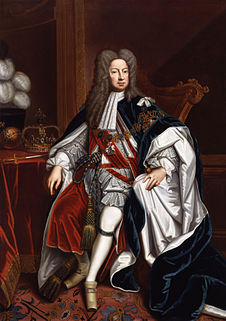

Next was the strict and structured Victorian Era from 1837-1901, which saw the reign of Queen Victoria. It was a time of peace and prosperity in Britain. This was a time of Industrial Revolution, Charles Darwin's book, 'On The Origin Of Species' which introduced the world to the ideas of evolution, work houses, The Crimean War, the emergence of photography and child labour. Queen Victoria married her first-cousin, Prince Albert in 1840, and also became the Empress of India in 1876. They had nine children together until Albert's death in 1861. From this point on, Victoria became deeply depressed and is famed for mourning and wearing black until her own death in 1901. Her son, Edward VII took over the throne after her death.
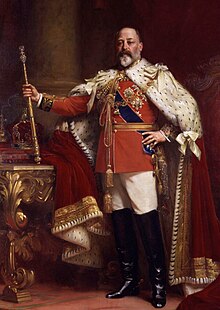
After the Victorians came the Edwardians who existed in England from 1901-1910. This short era included the start of World War 1 and saw the Titanic sink. Fictional writers in this era included J. M. Barrie, Arnold Bennett, G.K. Chesterton, Joseph Conrad, E. M. Forster, John Galsworthy, Kenneth Grahame, Rudyard Kipling, Edith Nesbit, Beatrix Potter, Saki, George Bernard Shaw, H. G. Wells, Edith Wharton, and P. G. Wodehouse.

ReplyDeleteAre you in need of a loan? Do you want to pay off your bills? Do you want to be financially stable? All you have to do is to contact us for more information on how to get started and get the loan you desire. This offer is open to all that will be able to repay back in due time. Note-that repayment time frame is negotiable and at interest rate of 3% just email us creditloan11@gmail.com